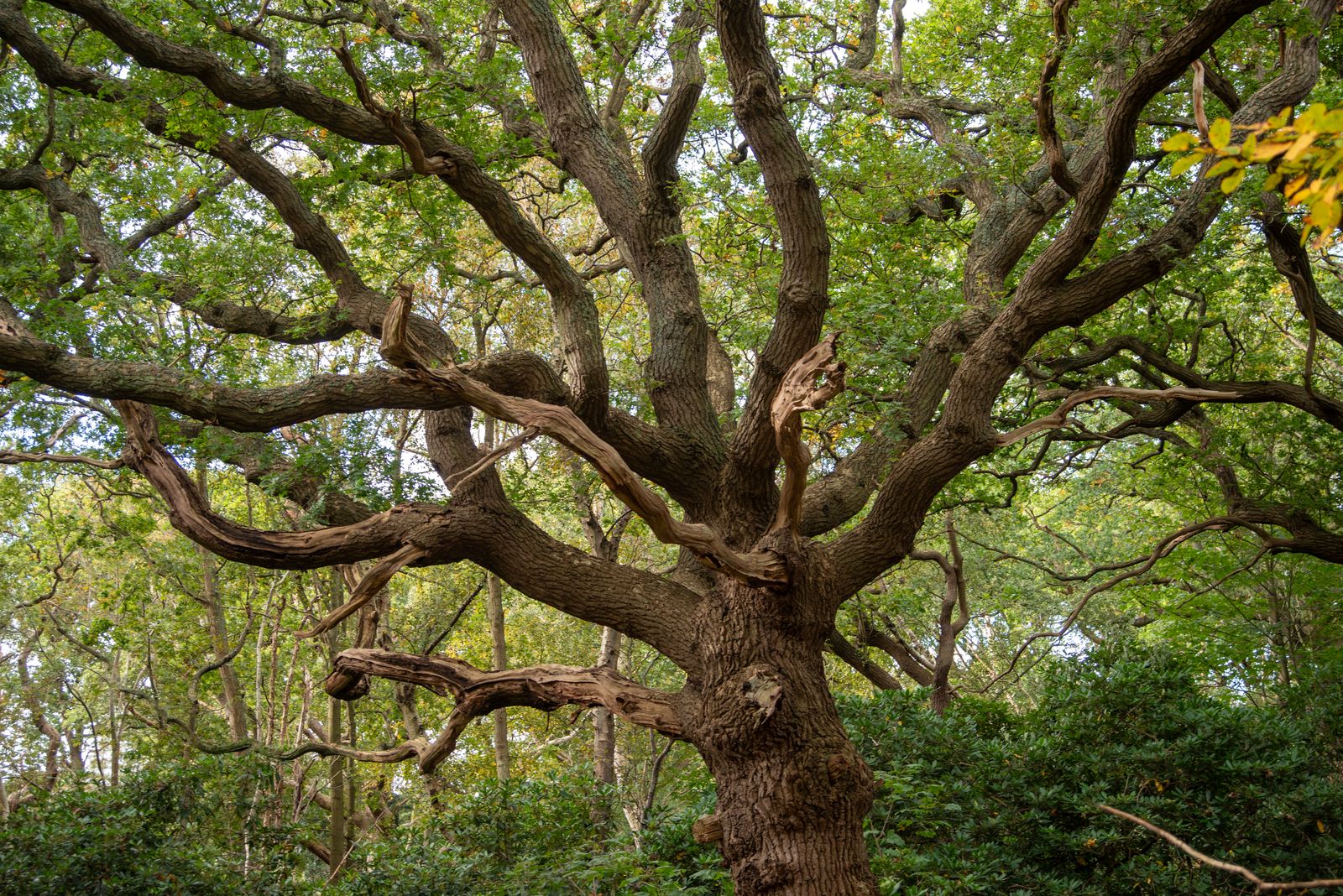
Oaks are the backbone of many Minneapolis, Edina and Minnetonka landscapes. Some bur oaks in the west metro predate statehood. Yet every summer we get calls about oaks that seemed healthy in June and dropped their leaves by August. In most of those cases the cause is oak wilt, a fungal disease that is almost entirely preventable.
How oak wilt spreads
Oak wilt spreads in two ways. Above ground, small sap beetles pick up fungal spores from mats that form under the bark of recently killed red oaks. The beetles are drawn to the smell of fresh wounds on healthy oaks, and when they feed on the sap, they introduce the fungus. This overland spread happens mainly from April through July.
Below ground, oaks of the same group often graft their roots together. Once one tree is infected, the fungus can move through those connections to neighboring oaks. This is why oak wilt often shows up as an expanding circle of dying trees.
Red oaks and white oaks behave differently
Red oak group trees, including northern red oak and northern pin oak, have pointed leaf lobes. They are highly susceptible and often die within weeks to a few months of symptoms appearing. White oak group trees, including bur oak and white oak, have rounded lobes and are more resistant. They may decline slowly over years and can sometimes be treated.
The April to July rule
Because overland spread depends on fresh wounds during beetle season, the most effective prevention is to avoid wounding oaks from April 1 through July 31. That means no pruning, no trimming for clearance, and extra caution with lawn mowers, string trimmers and construction equipment around trunks and roots.
- Schedule oak pruning between November and March
- If an oak is wounded by a storm in spring or summer, cover the wound immediately with latex paint or tree wound dressing
- Keep construction equipment out of oak root zones, which extend well beyond the drip line
- Do not move firewood from oaks that died of unknown causes
Symptoms to watch for
In red oaks, look for leaves that turn dull green or bronze from the outer edge inward, then drop while still partly green. Leaf drop in July or August is a warning sign. In white oaks, symptoms are often limited to individual branches that brown and die back over time.
Many things can stress an oak, including drought, two-lined chestnut borer and root damage. Proper diagnosis matters, so call an arborist if you see sudden summer leaf loss. Lab testing may be needed to confirm oak wilt.
What we do when oak wilt is found
When we confirm oak wilt, the goal is to protect nearby healthy oaks. We may recommend root graft disruption, which uses a vibratory plow or trenching to cut root connections between infected and healthy trees. Infected red oaks are usually removed during the dormant season and the wood is handled so it cannot form spore mats, often by debarking, chipping or tarping.
High-value oaks near an active infection can receive preventive fungicide injections. These work best on white oaks and on red oaks that are not yet infected.
Protect your oaks this year
If you own oaks, put a note on your calendar: no pruning from April through July. Book structural pruning for winter, keep an eye out for summer leaf drop, and call us if something looks wrong. Oaks are among the longest-lived trees in Minnesota, and with a little care they can outlast all of us.
Want an arborist to take a look?
Free, written estimates across Minneapolis, St. Paul and the west metro.