Removing a tree is never the part of the job we enjoy most. But when a tree has to come down, we believe it should not end up as waste. Since 2016 we have tracked where the wood from every removal goes, and last year about 94 percent of it found a second use. Here is how that works, from the moment the last section is lowered to the ground.
Sorting starts in your yard
Our crews sort material as they work. Branches and leaves under about four inches in diameter go straight into the chipper. Larger limbs are cut to firewood length or hauled whole. Trunk sections with good form, especially from species like walnut, oak, maple and elm, are cut long and set aside as potential saw logs.
If you want to keep anything, just tell us. Many clients ask for a few rounds for garden seating, a stack of firewood, or a slab from a tree that meant something to their family.
Saw logs become slabs and lumber
Logs with straight grain and few defects come to our yard off Hiawatha Avenue, where we mill them on a portable band saw. Slabs are stickered and air-dried for a year or more, then kiln-finished by a partner in Anoka. Local furniture makers, woodworkers and homeowners buy these slabs for tables, benches, shelves and mantels.
Urban trees often contain metal from old fences, nails or clotheslines, so every log is scanned with a metal detector before milling. Logs that cannot be safely milled move on to firewood.
Firewood for the neighborhood
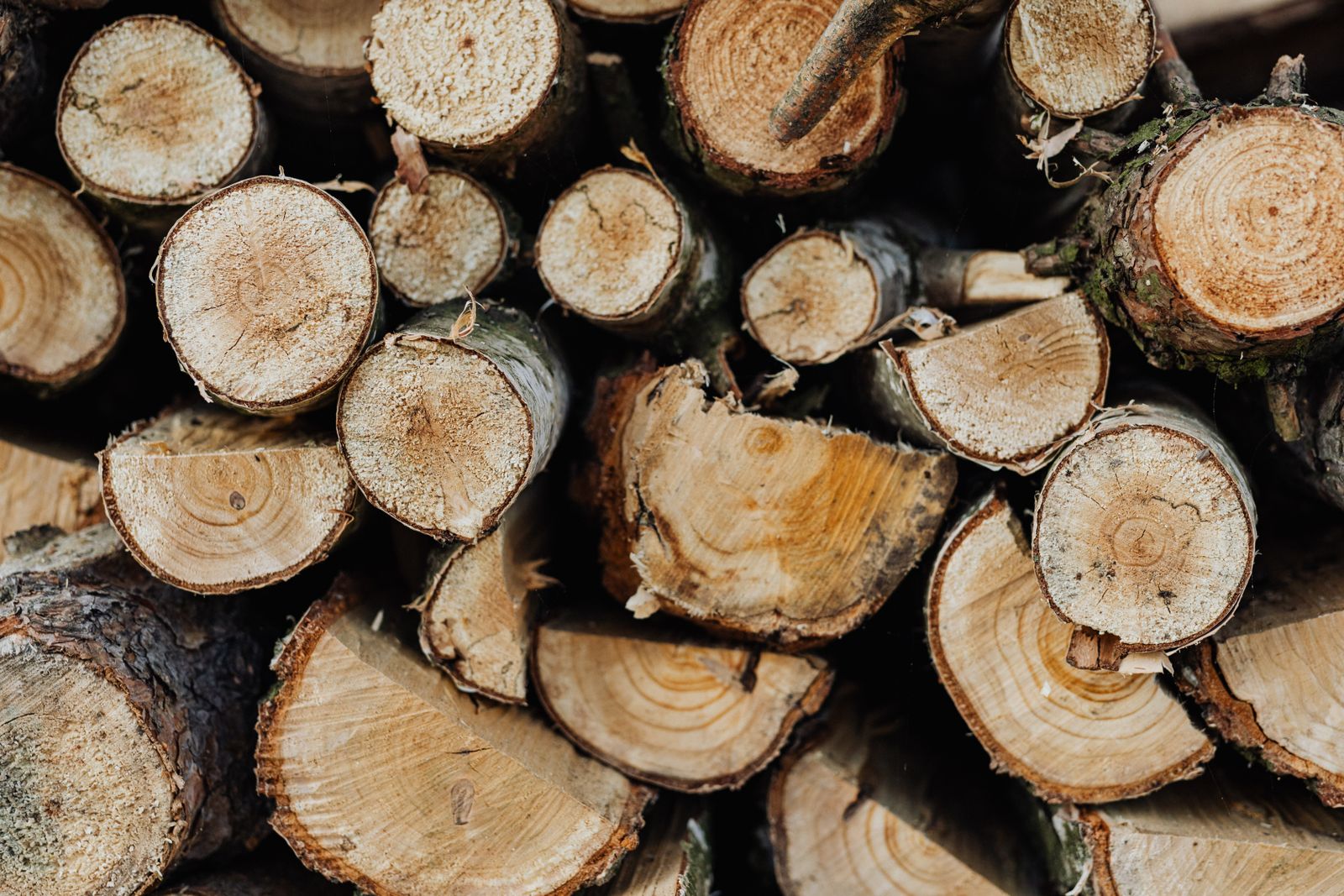
Hardwood that is not suitable for lumber is split and seasoned for firewood. We follow Minnesota Department of Agriculture rules on firewood movement, which help stop pests like emerald ash borer from spreading to new areas. Ash firewood stays within quarantine areas and is seasoned properly before sale.
A share of each season's firewood goes to community organizations and warming shelters through our winter donation program.
Chips become mulch and compost
Wood chips are one of the most useful byproducts of tree work. Fresh chips from mixed species make excellent path and bed mulch, and they break down into rich organic matter that feeds soil biology. We offer free chip drops to gardeners in our service area and supply several community gardens each spring.
Chips that are too fine or mixed with leaves are composted with partners, then returned to landscapes as soil amendment. Diseased material, such as oak wilt infected wood, is handled separately so it cannot spread disease.
What does not get reused
The remaining 6 percent or so is mostly material we cannot safely reuse: wood contaminated with soil and rocks, heavily decayed pieces, or material from invasive plants with seeds. Some of it is used as biomass fuel for district energy, and a small amount goes to yard waste facilities.
Replanting closes the loop
For every tree we remove, we plant or fund the planting of a new one through partnerships with local tree trusts. We also recommend replacement species for the client's own yard, favoring diverse, climate-resilient trees. A removal that feeds a garden, builds a table and makes room for a better-suited tree is a removal we can feel good about.
Want an arborist to take a look?
Free, written estimates across Minneapolis, St. Paul and the west metro.